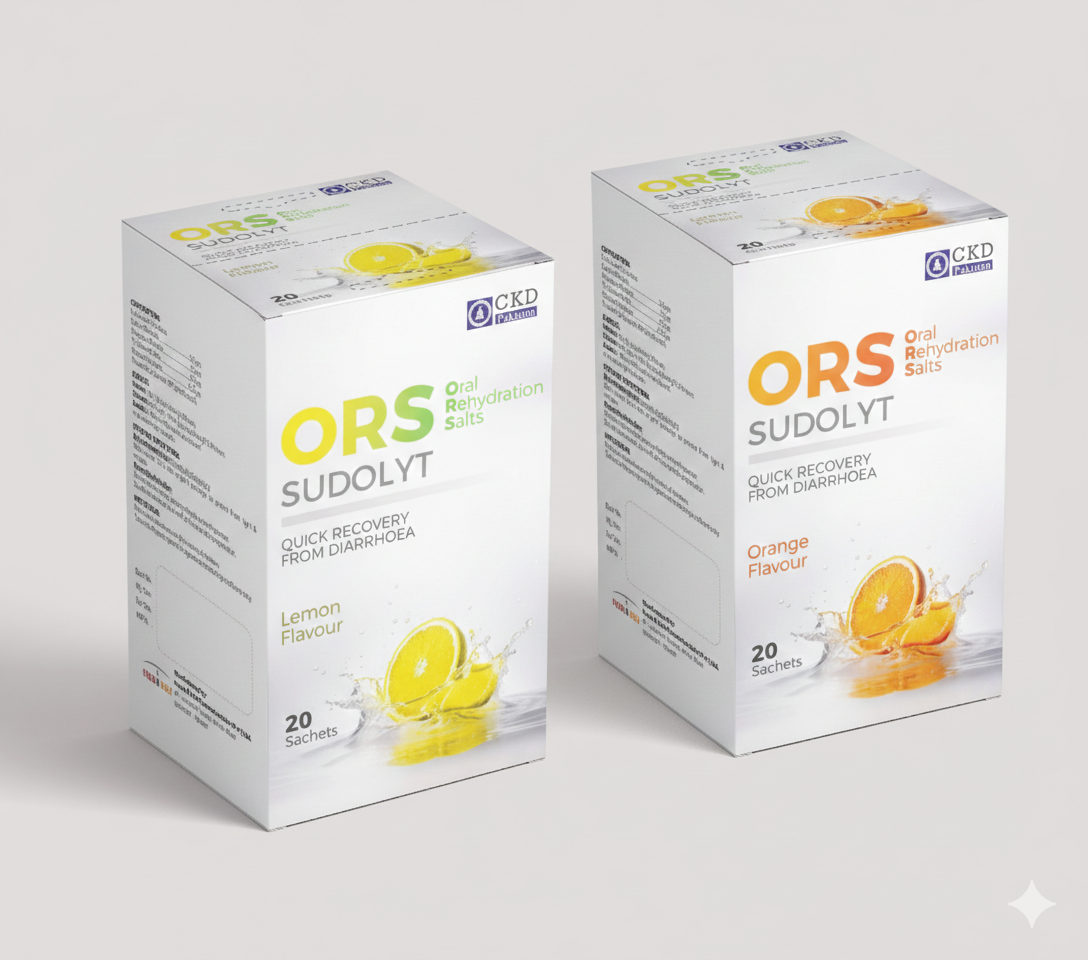


Sudolyt ORS is an Oral Rehydration Salt formulation indicated for the prevention and treatment of dehydration associated with diarrhea, vomiting, excessive sweating, and other conditions causing fluid and electrolyte loss. It helps restore body fluids and essential electrolytes.
Sodium Chloride
Potassium Chloride
Trisodium Citrate (or Sodium Bicarbonate)
Glucose (Anhydrous)
Sudolyt ORS works by utilizing the sodium–glucose co-transport mechanism in the intestinal mucosa.
Glucose facilitates active absorption of sodium.
Water follows sodium passively by osmotic action.
Potassium and citrate help correct electrolyte imbalance and metabolic acidosis.
This mechanism allows efficient rehydration even during ongoing diarrhea.
Acute and chronic diarrhea
Vomiting
Dehydration due to heat, fever, or excessive sweating
Fluid and electrolyte loss due to illness
Method of Preparation
Dissolve the entire contents of one Sudolyt ORS sachet in the prescribed volume of clean drinking water (usually 200 ml or 1 liter, as specified).
Do not boil after dissolving.
Use the prepared solution within 24 hours.
Recommended Dosage
Adults:
2-4 Liters in 24 hours or As needed to replace fluid loss; sip frequently.
Children:
Mild dehydration: 50 ml/kg over 4 hours
Moderate dehydration: 75 ml/kg over 4 hours
Over 1 Year 1 liter (4 Glass ) during 8_24 Hours.
Infants:
1 Liter (4 Glass) During 24 hours.
Dosage may be adjusted based on severity of dehydration and clinical condition.
Absolute / Major contraindications
Severe dehydration or shock → needs IV fluids, not ORS
Persistent vomiting that prevents oral intake
Intestinal obstruction or paralytic ileus
Unconscious or severely altered mental status (high risk of aspiration)
Known hypersensitivity to any component of the formulation
Relative contraindications / Use with caution
Severe electrolyte abnormalities (e.g., severe hyponatremia or hypernatremia)
Severe abdominal distension
High-output diarrhea where oral intake cannot keep up with losses
Renal failure or heart failure → risk of fluid overload (requires medical supervision)
Important note
ORS is NOT contraindicated in diarrhea, vomiting (if mild), malnutrition, or in infants—these are actually key indications when used correctly.
ORS is very safe and widely used, but it should NOT be used alone (or needs caution) in these situations:
Not a substitute for intravenous rehydration in severe dehydration.
Use with caution in patients with renal impairment, heart failure, or electrolyte imbalance.
Avoid use if solution becomes cloudy or contaminated.
Do not add sugar, salt, or other substances to the prepared solution.
Sudolyt ORS is generally well tolerated. Adverse reactions are rare and usually related to incorrect preparation, excessive intake, or underlying medical conditions.
1.Common Side Effects ( Mild and usually self limiting)
Nausea
Vomiting (if consumed too rapidly)
Abdominal bloating
2. Uncommon (Related to Improper Use)
Usually occur when ORS is over-concentrated or overused:
Hypernatremia (high sodium levels)
Fluid overload (rare, mainly in infants or elderly)
➡️ Risk factors:
Incorrect dilution
Renal or cardiac disease
Excessive intake without medical supervision
3. Rare (Serious – Usually Due to Clinical Condition)
Not caused by ORS itself, but may be worsened if misused:
Electrolyte imbalance
Worsening edema in heart failure patients
Aspiration (in unconscious or semi-conscious patients)
➡️ ORS itself does NOT cause toxicity when:
Prepared exactly as directed
Used in appropriate clinical situations
Most reported “ADRs” are actually administration errors, not pharmacological reactions.
Handling Rules for Side Effects
If vomiting occurs, stop administration for 5–10 minutes and restart slowly.
In case of persistent vomiting or worsening diarrhea, seek medical attention.
Discontinue use and consult a physician if signs of electrolyte imbalance appear.
Store in a cool, dry place away from direct sunlight.
Keep out of reach of children.
Do not use after the expiry date.
For oral use only.
Use under medical supervision in infants, elderly patients, and those with chronic illnesses.
This product is not intended to diagnose, treat, cure, or prevent any disease beyond its approved indications.
Read the label and instructions carefully before use.
In case of severe dehydration, consult a healthcare professional immediately.
We’re here to answer your questions and provide instant support. Chat with our expert team anytime.
LET’S CHAT